
How to Cut Manufactured Stone Capstones and Hearthstones to Fit
Share
Manufactured stone capstones and hearthstones can be cut to accommodate custom dimensions, trim excess material, or create openings around posts and columns using a masonry saw equipped with a diamond blade. Whether you need to reduce a standard-size capstone to fit a smaller structure, modify a hearthstone to fit a fireplace, or cut an opening around a wood post, careful measuring and cutting can help achieve the desired fit. Keep in mind that cut edges may expose the uncolored concrete interior and should be positioned or concealed during installation.
Manufactured stone capstones and hearthstones are popular finishing materials for columns, pillars, walls, fireplaces, outdoor kitchens, and other architectural features. They provide a finished appearance while protecting the top of a structure and creating a transition between different materials. For more information about completing your installation, see our complete guide to finishing manufactured stone veneer. However, not every installation will match the standard dimensions of an available capstone or hearthstone. Sometimes a project calls for a smaller piece than what is commercially available. Other installations require notches, openings, or modified edges to accommodate posts, framing, or other architectural features. Fortunately, manufactured stone capstones and hearthstones can generally be cut to accommodate these requirements.
Cutting manufactured stone is not particularly complicated, but it does require the right equipment, accurate measurements, and an understanding of how the material is manufactured. Unlike natural stone, manufactured stone veneer products are typically made from a cement-based mixture that incorporates Portland cement, lightweight aggregates, and mineral oxide pigments. The color is generally applied to the surface rather than extending completely through the material.
This distinction is especially important when cutting capstones and hearthstones because the newly exposed edges may look different from the original finished surfaces. Understanding how to work around this characteristic will help you achieve a more professional-looking installation.
In this post, we will cover the tools, techniques, and considerations involved in cutting manufactured stone capstones and hearthstones to size, including reducing oversized pieces, creating openings around posts, and concealing exposed cut edges.
Can Manufactured Stone Capstones and Hearthstones Be Cut?
Manufactured stone capstones and hearthstones can be cut to accommodate different dimensions and installation requirements. A diamond-blade masonry saw is generally the preferred tool because it is designed to cut through concrete-based materials and can produce relatively clean, controlled cuts.
Depending on the thickness of the material and the type of modification needed, a handheld angle grinder equipped with a diamond masonry blade may also be useful. Larger or more involved cuts may require a wet masonry saw or a professional stone-cutting setup.
One important consideration is that manufactured stone capstones and hearthstones are not necessarily colored all the way through. The finished surface receives its color during manufacturing, while the interior of the product may have a different, typically uncolored concrete appearance. When a piece is cut, the exposed interior can contrast noticeably with the surrounding finished surface.
This does not mean the capstone cannot be cut or used. It simply means that the finished installation should be planned so that exposed cut edges are hidden whenever possible. Positioning cut edges against walls, beneath overhanging materials, or toward the inside of an installation can help maintain the intended appearance.
Tools Needed to Cut Manufactured Stone Capstones and Hearthstones
The most important tool for cutting manufactured stone is a masonry saw equipped with a diamond blade. Diamond blades are designed to cut through hard materials such as concrete, masonry, and manufactured stone without relying on the abrasive action of a conventional metal-cutting blade.
For straight cuts, a wet masonry saw is often the best choice. Water helps control dust, reduces heat, and can produce a cleaner cut. A saw with sufficient cutting depth for the thickness of the capstone or hearthstone will make the job easier and reduce the need to reposition the material.
An angle grinder with a diamond blade can be useful for smaller adjustments, notches, and cuts around posts. However, handheld cutting requires a steady hand and additional care to maintain a straight line. It is generally better suited to shorter cuts rather than large dimensional reductions.
Accurate measuring tools are equally important. A tape measure, framing square, straightedge, and pencil or appropriate marking tool will help ensure the cuts are positioned correctly. Clamps or other suitable supports can help stabilize the material while cutting, provided they do not interfere with the blade.
Because cutting cement-based materials can generate respirable crystalline silica dust, appropriate safety precautions are essential. Wet cutting is preferable where practical. When dry cutting is necessary, use suitable dust-control equipment and respiratory protection appropriate for silica exposure. Eye protection, hearing protection, gloves, and proper work positioning should also be part of the process.
Cutting Capstones and Hearthstones to a Smaller Size
One of the most common reasons for cutting a manufactured stone capstone or hearthstone is that the available standard dimensions are larger than what the project requires.
For example, a project may require a capstone or hearthstone that is smaller than the standard sizes available. Rather than requiring a custom-manufactured product, the installer can cut an existing standard-size piece down to the dimensions needed for the installation.
The first step is to determine the actual dimensions needed for the finished installation. Measure the column or supporting structure and account for any desired overhang. If the capstone is intended to extend beyond the column, those additional dimensions should be included before marking the cut lines.
Once the measurements are established, mark the required dimensions on the capstone. Use a straightedge or framing square to ensure the lines are square and consistent. It is worth measuring twice before making any cuts because removing too much material cannot easily be corrected.
When reducing a standard-size capstone to fit a smaller structure, material will need to be removed from the appropriate sides to achieve the desired dimensions. Depending on the installation and the finished appearance, it may be possible to position the original factory-finished edges toward the most visible sides while placing the newly cut edges against the supporting structure. This is particularly important because cut surfaces may expose the uncolored interior of the concrete. Whenever possible, position the cut edges so they are covered by the supporting structure or otherwise concealed from view after installation.
The same approach applies to hearthstones. If a standard hearthstone is larger than the fireplace opening or surrounding hearth area requires, it can be trimmed to achieve the desired dimensions. Careful planning will help ensure that the finished edges are appropriately positioned and that the hearthstone fits the surrounding installation.
Cutting Capstones Around Wood Posts and Columns
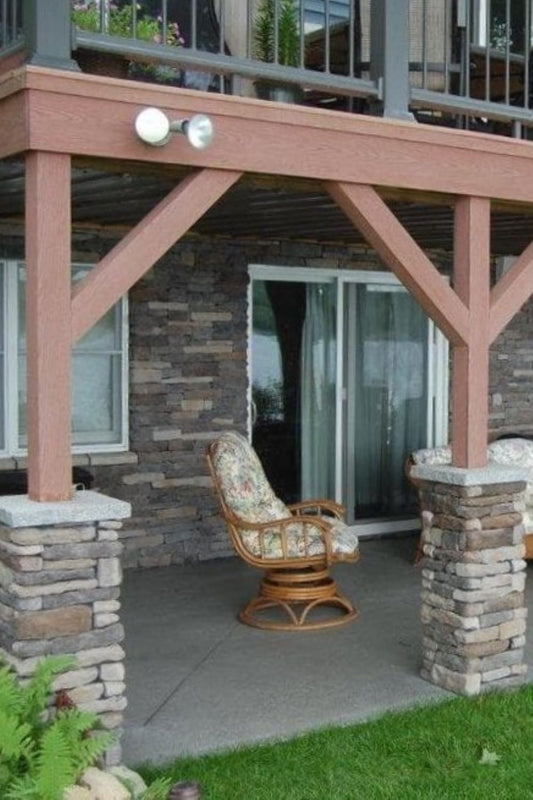
Another common modification involves cutting a capstone to accommodate a wood support post extending through the center of a masonry column. This is common with porch columns, deck supports, entryways, and other outdoor structures.
If the wood post has not yet been installed, the simplest approach is to cut a square or rectangular opening through the center of the capstone to accommodate the post. Measure the post and mark the opening on the underside of the capstone, then use a diamond-blade masonry saw or angle grinder to make the cut. The capstone can then be installed over the column before the wood post is installed through the opening.
If the post is already in place, the capstone will need to be cut into sections to fit around it. One option is to cut the capstone diagonally from corner to corner, creating two triangular sections. An opening is then cut into the inside edge of each section so the pieces can be fitted together around the post. Alternatively, the capstone can be cut straight through the center and notched to accommodate the post, or divided into four smaller sections with angled joints.
Regardless of the cutting method, measure carefully and dry-fit the pieces before installation. Remember that cut edges may expose the uncolored concrete interior, so position these edges toward the post or inside of the installation whenever possible to keep them hidden.
If you're planning a project involving stone-clad columns, posts, or pillars, explore our complete guide to stone veneer columns, posts, pillars, and arches for more information and design ideas.
Why Cut Edges May Look Different From Finished Surfaces
One of the most important things to understand before cutting manufactured stone capstones and hearthstones is how the products are colored. Manufactured stone veneer is typically made from a cement-based mixture containing Portland cement, lightweight aggregates, and mineral oxide pigments. During production, color is applied to the exterior surfaces to create the appearance of natural stone. Depending on the product and manufacturing process, the interior concrete mixture may not contain the same coloration as the finished exterior.
This means that cutting through a capstone or hearthstone can expose a lighter, gray, or otherwise different-looking interior surface. The contrast may be especially noticeable when the original product has a darker finish, such as charcoal, black, or deep brown.
For this reason, installers should not assume that a cut edge will automatically match the surrounding factory-finished surfaces. Even if the cut is perfectly straight and smooth, the exposed interior may still look noticeably different.
The best solution is generally to plan the installation so that cut edges are concealed. When reducing a capstone to a smaller dimension, the newly cut sides can often be positioned over the supporting column. When creating an opening around a wood post, the cut surfaces can face inward toward the post. When trimming a hearthstone, cut edges can sometimes be placed against the fireplace surround or another adjacent surface.
Some installers may consider applying color to the exposed edges to improve the appearance. However, matching the original manufactured stone color and texture can be difficult, and applying paint or other coatings may affect the manufacturer's warranty. Any proposed color treatment should be discussed with the manufacturer before proceeding.
The simplest and most reliable approach is to plan the cuts around the finished installation rather than expecting the exposed concrete interior to look identical to the factory-finished surface.
Tips for Getting Clean, Accurate Cuts
Accurate measurements and proper cutting techniques make a significant difference in the finished appearance of manufactured stone capstones and hearthstones. Before making any cuts, take the time to inspect the piece and determine which sides will remain visible after installation.
Whenever possible, use a wet masonry saw for longer, straight cuts. A stable cutting surface and properly supported material will help prevent movement and reduce the likelihood of uneven cuts. Avoid forcing the blade through the material. Allow the diamond blade to cut at its intended speed and maintain steady, controlled movement.
For smaller openings and notches, an angle grinder can provide greater flexibility. However, avoid making cuts too aggressively near corners or narrow sections where the material could crack or break. Supporting the material properly is particularly important when removing larger sections.
It is also a good idea to make a cardboard or plywood template when working around irregularly positioned posts or other obstacles. This allows the installer to verify the dimensions and fit before cutting the actual capstone. A template can be especially useful when several pieces need identical modifications.
Finally, dry-fit the cut capstone or hearthstone before permanently installing it. This provides an opportunity to check the dimensions, confirm that the opening fits around the post, and make minor adjustments if necessary.
When to Consider Professional Stone Cutting
While many straightforward cuts can be completed by an experienced installer or homeowner with the proper equipment, more complicated modifications may be better handled by a professional masonry or stone-cutting contractor.
Large capstones, thick hearthstones, unusual shapes, and openings that remove significant portions of the material require additional care. A professional with experience cutting concrete and masonry products will generally have access to the equipment needed to make more precise cuts.
Professional assistance may also be worthwhile when the capstone is particularly expensive, difficult to replace, or intended for a highly visible architectural feature. A mistake can result in a damaged piece that cannot easily be repaired or reused.
If you are unsure whether a particular modification is practical, it is always better to evaluate the dimensions and cutting requirements before purchasing or modifying the material.
How to Cut Manufactured Stone Capstones and Hearthstones to Fit
Manufactured stone capstones and hearthstones offer flexibility for a variety of masonry and architectural projects. Although standard sizes are available, cutting these products can make it possible to accommodate smaller columns, custom dimensions, wood posts, and other installation requirements.
The key is to use the proper masonry-cutting equipment, measure carefully, and plan the cuts around the finished installation. Most importantly, remember that the interior of manufactured stone products may not be colored all the way through. Exposed cut edges should be positioned so they are hidden whenever possible.
Whether you are reducing a standard-size capstone, creating an opening for a support post, or trimming a hearthstone to fit a fireplace, careful planning and preparation can help achieve a professional-looking result.
From Mountain View Stone: What You Should Know
Mountain View Stone manufactures capstones and hearthstones in standard sizes and does not offer custom-sized options. If your project requires dimensions that differ from our available products, a standard-size piece can often be cut to fit by your installer or a qualified masonry professional. Keep in mind that cutting manufactured stone may expose the uncolored concrete interior, which can look different from the finished exterior surface. We recommend planning cuts so exposed edges are concealed whenever possible. Always use appropriate masonry-cutting equipment and safety precautions, and dry-fit modified pieces before installation to confirm the dimensions and fit.
Frequently Asked Questions About How to Cut Manufactured Stone Capstones and Hearthstones to Fit
Can you cut manufactured stone capstones with a regular saw?
No. A conventional wood-cutting or metal-cutting saw is not appropriate for cutting manufactured stone. Use a masonry saw equipped with a diamond blade designed for cutting concrete and masonry materials. A wet masonry saw is generally preferred for straight cuts because it helps control dust and heat.
Can you cut a manufactured stone capstone down to a smaller size?
Yes. Manufactured stone capstones can generally be cut down to accommodate smaller dimensions using a diamond-blade masonry saw. Measure carefully, mark the desired dimensions, and plan the cuts so the exposed interior edges are concealed when the capstone is installed.
Will the inside of a manufactured stone capstone be the same color as the outside?
Not necessarily. Manufactured stone capstones and hearthstones are generally surface-colored during manufacturing, meaning the interior concrete may not have the same color as the finished exterior. Cutting the material can expose a lighter or differently colored interior. For the best appearance, position cut edges where they will be concealed during installation.
Can you cut a capstone to fit around a wood post?
Yes. A manufactured stone capstone can be cut to create a square or rectangular opening around a wood post. The opening should be measured carefully to accommodate the post, and the cut edges should face inward toward the post whenever possible so the uncolored interior surfaces are not visible.
Can you cut manufactured stone hearthstones to fit a fireplace?
Yes. Manufactured stone hearthstones can generally be trimmed to fit the dimensions of a fireplace or surrounding hearth area. Use a diamond-blade masonry saw and plan the cuts so that exposed interior edges are hidden against adjacent surfaces whenever possible.
Does Mountain View Stone manufacture custom-sized capstones and hearthstones?
Mountain View Stone offers capstones and hearthstones in standard sizes rather than custom dimensions. Customers who need a nonstandard size can purchase an available standard product and cut it to the required dimensions by their installer or a qualified masonry professional.
What's Next?
Bring the timeless beauty of manufactured stone veneer to your next project. Shop now to find the style that’s right for your space or order a sample to see the color, texture, and quality firsthand before you buy.
Have a Question?
Please see our full terms of service or check out our frequently asked questions.
For general information and questions please call: (864) 882-8960 Mon. - Fri. 8am - 5pm (EST) or email: info@mountainviewstone.net we are more than happy to help you.
Or you can submit your questions via our contact us page.
We look forward to working with you on your upcoming project.
The Mountain View Stone Team
Pictured is an AI generated image of cutting a stone veneer capstone / hearthstone.